
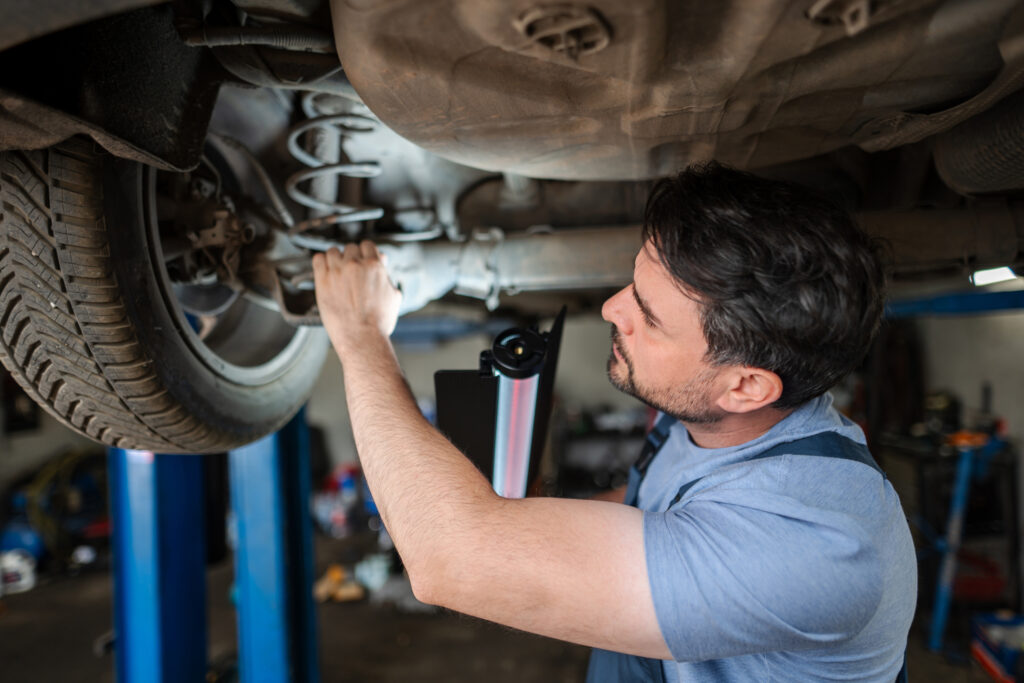
Signs Your Shocks and Struts Are Worn Out
Your car should settle quickly after a bump and stay steady when you brake or turn. If it keeps bouncing, dips forward during braking, or feels less stable around corners, worn shocks or struts could be part of the problem.
Changes in ride quality and handling are among the most common symptoms of bad shocks and struts drivers notice. Shocks and struts help control movement in your car’s suspension, so these changes can be a sign that it is time to have the system inspected. Let’s take a look at all the signs you should watch for before you end up with a serious issue.
What Is the Difference Between Shocks and Struts?
Shocks and struts perform a similar job: they control suspension movement and limit bouncing after bumps. The key difference is how they fit into the suspension. A shock is a separate damping component, while a strut combines damping with structural support for the suspension assembly.
Suspension layouts vary by vehicle, so some cars use struts on one axle and shocks on the other. Wear in either part can affect ride comfort, tire contact with the road, and handling.
What Are the Signs of Worn Shocks and Struts?
The signs of worn struts often overlap with those of worn shocks, especially in how your car rides, brakes, or handles. Watch for:
- Nose-diving under braking. If the front of your vehicle dips noticeably when you brake, the shocks or struts may not be controlling weight transfer effectively.
- Excessive bouncing after bumps. A vehicle should settle soon after going over a bump. Repeated bouncing can mean these components are no longer damping suspension movement properly.
- Uneven tire wear. Suspension wear can affect how consistently the tires stay in contact with the road, sometimes leading to uneven or cupped tread.
- Poor handling around corners. Extra body movement, drifting, or pulling through turns can indicate a problem with the suspension or steering system.
- Clunking sounds. Knocking or clunking over bumps can come from struts, shocks, mounts, or other suspension parts. Because similar noises may also be linked to other car problems, an inspection can help pinpoint the source.
When To Replace Shocks and Struts
Shocks and struts do not have a universal replacement interval. Their lifespan depends on mileage, road conditions, driving habits, vehicle design, and the condition of the suspension.
Rather than relying on mileage alone, use your vehicle manufacturer’s recommendations and our maintenance checklist to include suspension inspections in your regular maintenance routine. If ride quality or handling changes before the next scheduled check, have the shocks and struts inspected sooner to determine if replacement is needed.
Schedule Suspension Repair With Kennedy Transmission
Changes in ride quality or handling can be a sign that your suspension needs attention. Kennedy Transmission provides suspension and steering services for Minnesota drivers dealing with bouncing, pulling, uneven tire wear, and other suspension problems.
If you have noticed any of these changes, find your nearest Kennedy location to schedule an inspection. A technician can identify the source of the problem and recommend the appropriate next step for your vehicle.