
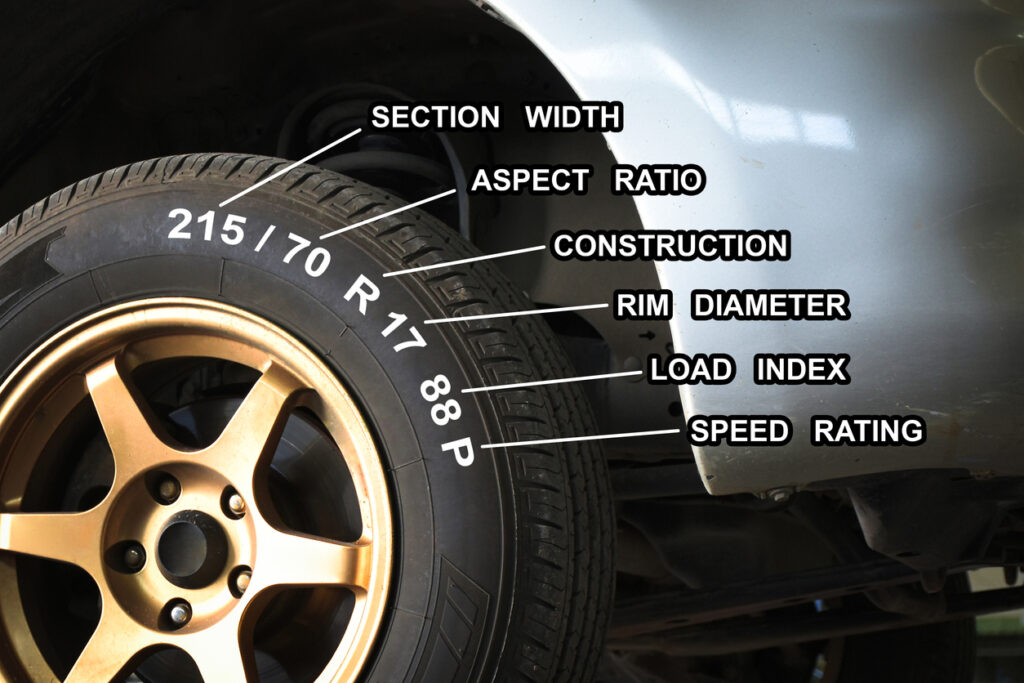
A tire sidewall carries more information than most drivers realize. Learning how to read tire sidewall markings can help you identify the tire’s width, profile, wheel size, load capacity, speed rating, and even when it was manufactured.
So, what do tire numbers mean? Take P225/60R17 99H. Each part of that code has a specific purpose, and knowing what those markings represent makes it easier to compare what is on your vehicle with the specifications listed in your owner’s manual or on the driver-side door placard.
Tire Size Meanings: Width, Aspect Ratio, and Rim Diameter
Start with P225/60R17. The “P” indicates a passenger tire, while 225 is its section width in millimeters. The 60 is the aspect ratio, meaning the sidewall height is 60% of the tire’s width.
The “R” stands for radial construction, and 17 is the wheel diameter in inches. These measurements work together, so understanding tire size and load can help when comparing replacement tires or custom wheels because a different profile or wheel diameter can change how the tire fits and performs.
What the Load Index and Speed Rating Mean
After the tire dimensions comes another combination, such as 99H. The 99 is the load index, while the H is the speed rating.
The load index is a code rather than a weight measurement. A tire load index chart translates that number into the maximum weight the tire is rated to carry. The letter identifies the tire’s tested speed capability. Both ratings play a role when choosing the right replacement tires, so compare them with the specifications recommended for your vehicle before selecting a new set.
Reading Tire Age With the DOT Code
The DOT code on the sidewall includes the tire’s manufacturing date. When reading tire age, focus on the final four digits while checking your tire’s DOT code. The first two indicate the production week, and the last two indicate the year. A code ending in 2424, for example, means the tire was made during the 24th week of 2024.
That date is useful, but age alone does not describe a tire’s condition. Other factors that affect tire life, including tread wear, inflation, vehicle load, and driving conditions, can also influence how long a tire remains in service.
Get Tire Guidance With Kennedy Transmission
Understanding the markings on your tire can make it easier to spot when something does not match your vehicle’s specifications or when a tire may need closer attention. Kennedy Transmission can help answer questions about tire sizing, condition, and replacement options.
Contact your nearest Kennedy Transmission for a tire consultation and vehicle assessment.