
Minnesota winters do not go easy on a vehicle. By the time the snow has melted and the salt trucks have parked for the season, most cars and trucks in the Twin Cities are quietly carrying the wear of four or five months of subzero starts, slush, gravel, potholes, and the constant chemical bath of road salt. Spring is when that wear catches up with you, and it is the single most important time of year to give your vehicle a thorough check.
This guide walks through the full post-winter recovery checklist Minnesota drivers should run before the weather warms for good. From an undercarriage inspection after months of road salt to AC prep ahead of summer heat, here is what to look at, what to ask your mechanic, and why each item belongs on your spring car maintenance Minnesota checklist.
Why Spring Maintenance Matters in Minnesota
Drivers in milder climates can usually treat seasonal maintenance as a soft recommendation. In Minnesota, it is closer to a requirement. Salt brine, magnesium chloride, freeze-thaw cycles, and rough winter road conditions all leave their mark. A vehicle that ran fine in February can develop new symptoms in April once the system has thawed and components start moving freely again.
Spring is also the season when a lot of small, low-cost fixes prevent expensive summer repairs. Catching a corroded brake line, a slow coolant leak, or a tire that is wearing unevenly in May is dramatically cheaper than discovering it in July on the way to the cabin. A proper post-winter inspection checklist helps you stay ahead of those issues. For context on what to avoid, our team has also documented common spring maintenance mistakes that drivers make every year.
Start With an Undercarriage Inspection After Road Salt
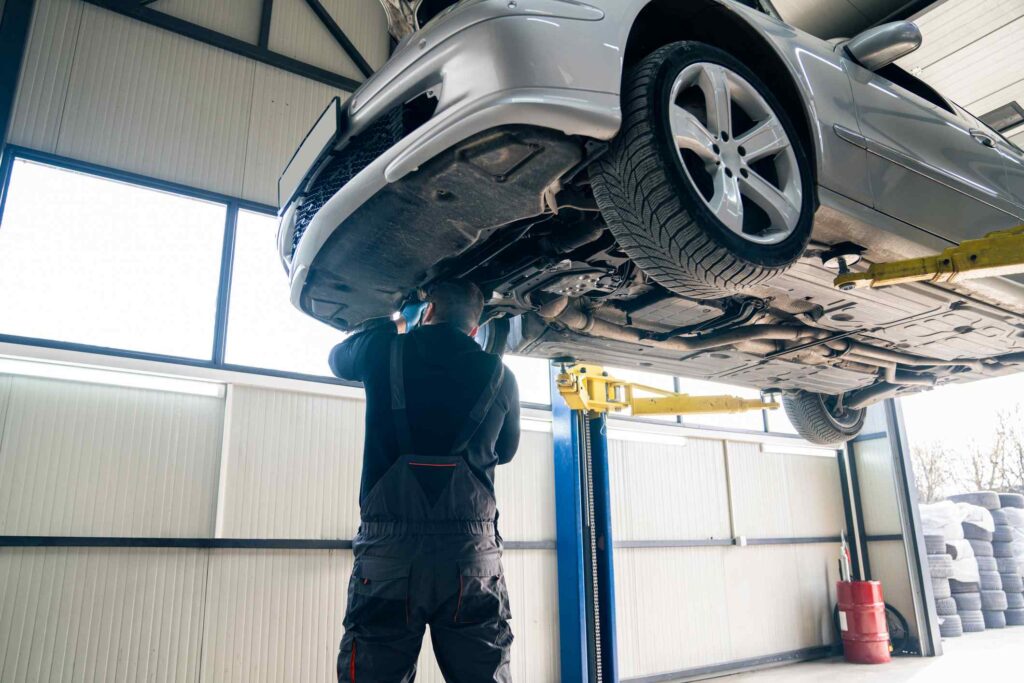
The first stop on any spring service should be the bottom of the vehicle. Road salt does not stop working once the snow is gone. It clings to brake lines, fuel lines, exhaust components, the frame, and the underside of body panels, where it quietly accelerates corrosion through the spring and summer.
A thorough undercarriage inspection should include the frame and subframe, suspension and steering components, exhaust hangers, the gas tank straps, and the brake and fuel lines. Surface rust is normal in Minnesota. Flaking, scaling, or active corrosion on a load-bearing or pressurized component is not, and any of those findings should be addressed before they fail.
A high-pressure undercarriage wash is the simplest first step a driver can take on their own. After that, a professional inspection on a lift is the only reliable way to evaluate everything that is hard to see from the driveway. Pay particular attention to anything within range of the front wheels, where salt spray is most concentrated.
Inspect the Brakes Before Summer Driving
Brakes take a beating during a Minnesota winter. Repeated hard stops on slick roads, salt and grit packed into the calipers, and condensation inside the rotors all combine to wear pads faster and corrode rotor surfaces. Many drivers notice the symptoms first in spring, when the rust on the rotors finally works free and starts to cause vibration or pulsing under braking.
A proper spring brake check should evaluate pad thickness, rotor condition, caliper movement, brake hardware, and the condition of the brake fluid. If you are feeling vibration when you brake, hearing grinding, or noticing a pulsing pedal, those are not symptoms to ride out. Our guide to the six signs you need to check your brakes walks through what to listen and feel for in everyday driving.
Spring is also the right time to look at brake fluid. Brake fluid is hygroscopic, meaning it absorbs moisture from the air over time, and a winter of temperature swings can leave the fluid heavily contaminated. Most manufacturers recommend a flush every two to three years, and a Kennedy technician can test the moisture content while your vehicle is in the bay.
Top Off Fluids and Replace What the Winter Used Up
Winter is hard on every fluid in a vehicle. Cold thickens oil, stresses transmission fluid, and accelerates coolant breakdown. By the time temperatures climb into the 60s, most of those fluids deserve a look.
A complete spring service should check or replace:
- Engine oil and oil filter, especially if you ran a winter-weight oil.
- Coolant level, color, and freeze point.
- Brake fluid moisture content.
- Transmission fluid level and condition.
- Power steering fluid (where applicable).
- Windshield washer fluid, swapping winter mix for summer.
Low or contaminated fluids are one of the most common reasons drivers end up needing larger repairs later in the year. Our vehicle filter and fluid replacement services cover all of the above in a single visit, and most can be wrapped into a regular oil change appointment.
Swap Winter Tires and Recheck Pressure
For drivers who run dedicated winter tires, late April through mid-May is the right window to swap back to all-seasons or summer tires. Continuing to run winter tires once daytime temperatures consistently climb above 45° F wears them down quickly and reduces handling on warm pavement.
For drivers running all-seasons year-round, spring is still the right time to inspect the tires. Look for uneven wear, sidewall cracking, embedded debris from gravel and pothole hits, and tread depth. The classic penny test still works in a pinch, but a proper tread depth gauge is more accurate. Tires worn below 4/32″ struggle in wet conditions, even if they look serviceable.
Tire pressure is the other quick win. Pressure drops about 1 PSI for every 10° F change in ambient temperature, which means most Minnesota vehicles are running underinflated by the time spring arrives. Properly inflated tires improve fuel economy, handling, and tire life, and the check takes less than five minutes at any service station.
Get an Alignment Check After Pothole Season

Minnesota’s spring potholes are infamous, and they do not stop at the surface. A single hard pothole hit can knock a vehicle’s alignment out of spec, throw off camber or toe, and start a slow, uneven tire wear pattern that ruins a set of tires months before it should.
Symptoms of an alignment problem include the steering wheel sitting off-center on a straight road, the vehicle drifting or pulling to one side, uneven tire wear across the front of the tread, or a vibration that does not go away after a tire rotation. Any of those signs warrant a check.
An alignment is also the moment to evaluate the suspension. Worn struts, leaking shocks, and damaged control arm bushings all become more obvious once the roads are dry and you can hear what the car is actually doing. If something does not feel right, our car suspension and steering services can diagnose the cause.
Prep the AC for Summer
The first 80° F day usually exposes any problem with a vehicle’s air conditioning, and by then the shops are busy. Spring is the cheaper, faster time to find out whether the AC is ready for summer.
A basic AC check should look at refrigerant level and pressure, compressor operation, the condition of the condenser at the front of the vehicle (which is exposed to salt and debris all winter), the cabin air filter, and the blend doors that control airflow. A system that takes more than a few minutes to blow cold, blows warm air intermittently, or makes new noises when the AC is engaged is telling you something.
Refrigerant leaks are the most common cause of slow AC failure, and they are easier to find and seal in spring than in the middle of July. While the system is open, replacing the cabin air filter is a quick add-on that meaningfully improves airflow.
Don’t Forget the Battery
A battery that survived winter is a battery that has been working overtime, and the heat of summer is often what finally kills it. Cold reduces a battery’s available cranking amps, but heat is what shortens its lifespan by accelerating internal corrosion.
A spring service is the right time to run a load test, check terminal condition, and clean any corrosion at the connections. Most batteries last three to five years in Minnesota’s climate. If yours is in that range and the winter felt slow to start, replacing it proactively in spring is cheaper than a tow in July.
Wipers, Lighting, and Visibility
Winter is brutal on wiper blades. Ice scrapers, frozen rubber, and the abrasion of frozen slush leave most blades torn or smeared by April. Spring rain demands clean wipes, and replacing the front and rear blades is a five-minute job that pays off the first time you get caught in a thunderstorm.
While you are at it, walk around the vehicle and check every exterior light, including headlights, taillights, brake lights, reverse lights, turn signals, and the license plate light. Foggy or yellowed headlight lenses can also be restored with a headlight restoration kit or replaced outright if visibility at night has gotten noticeably worse.
Wash Off the Winter, Wax the Paint
The most common spring car care advice is also the most overlooked: wash the car, top to bottom, including the undercarriage. Months of salt, sand, and brine accelerate paint damage and corrosion well after the snow is gone. A proper spring wash gets all of that off the surface and out of the wheel wells.
Once the vehicle is clean, a coat of wax (or a sealant or ceramic spray, depending on what you use) protects the paint through the summer UV and bug season. For drivers who plan to keep their vehicle long-term, this small step adds years to the paint and meaningfully helps resale value.
Schedule Your Spring Car Service With Kennedy Transmission
Spring car care in Minnesota is not about doing one thing, it is about catching everything winter loosened, corroded, or wore down before it costs you a bigger repair later. A single visit can cover most of the items on this checklist, and the team at Kennedy Transmission has been doing it for Minnesota drivers for more than 60 years.
If your vehicle is due for its spring service, contact us online or stop in at any of our Minnesota shop locations to schedule a visit. We will run through the post-winter checklist, identify anything that needs attention, and get your vehicle ready for summer driving.
Frequently Asked Questions About Spring Car Maintenance in Minnesota
How soon after winter should I bring my car in for spring service?
The right window is typically mid-April through mid-May, once the salt trucks have stopped running for the season but before the busy summer rush. Bringing your vehicle in early gives the shop time to find anything that needs attention without a wait, and it gets the salt off the undercarriage before it does months of additional damage.
How much damage does road salt actually do to a car?
A lot, and most of it happens out of sight. Road salt accelerates corrosion on brake lines, fuel lines, exhaust components, the frame, and the underside of body panels. Modern vehicles are better protected than older ones, but no factory coating is fully salt-proof in Minnesota. An undercarriage wash and a spring inspection are the simplest defenses.
Do I really need to swap tires every spring and fall?
If you run dedicated winter tires, yes. Winter tire compounds are designed for cold weather and wear quickly above 45° F, and the deep, aggressive tread is overkill on dry summer pavement. If you run all-seasons, you do not need to swap, but you should still check tread depth, alignment, and pressure each spring.
Why does my car shake or vibrate when I brake after winter?
Vibration under braking after winter is usually caused by rust on the rotor surfaces, warped rotors from temperature stress, or stuck caliper hardware. It rarely fixes itself, and continued driving with the symptom will wear the brake pads unevenly. Bringing the vehicle in for a brake inspection in spring is the right call.
Is a check engine light always serious in the spring?
Not always, but it should never be ignored. Spring temperature swings can trigger codes for evaporative emissions, oxygen sensors, and other systems that respond to weather. A quick diagnostic scan will tell you whether the code is something to fix now or something to monitor.