
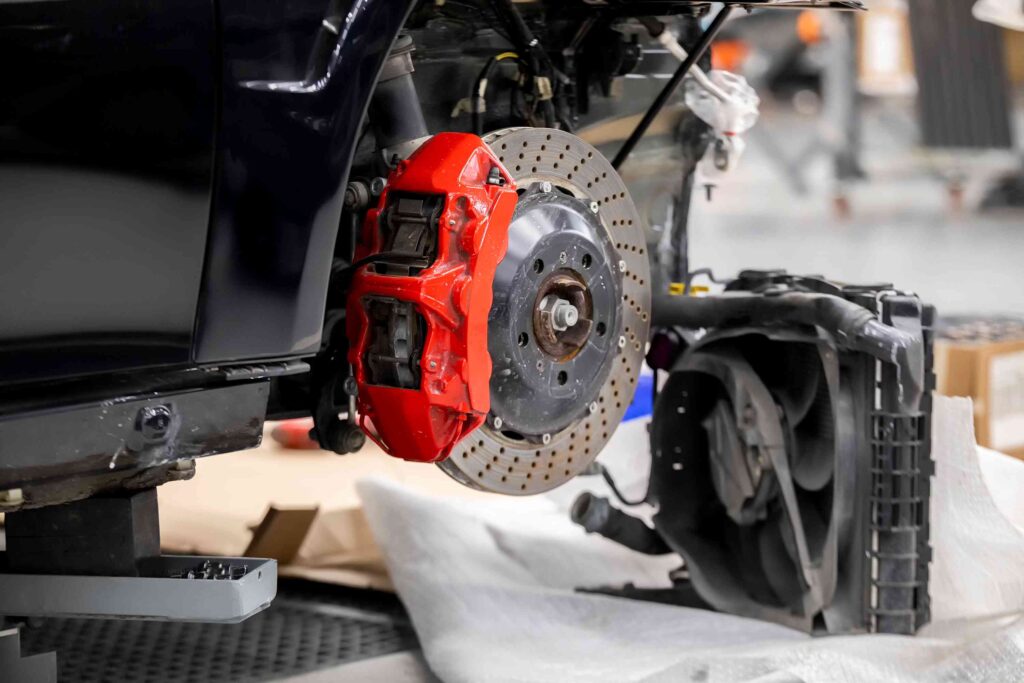
Brake rotors do not get nearly as much attention as brake pads, but they are just as important to safe stopping. The rotor is the smooth metal disc your pads clamp down on every time you brake, and like any wear part, it has a finite life. Knowing when it is time for brake rotor replacement, when resurfacing is enough, and what symptoms to watch for can save you both money and a longer trip to the shop later.
Here is how to recognize the signs of worn or warped rotors, how rotors are usually serviced, and what to expect when it is time to bring your vehicle into Kennedy Transmission for brake service and repair.
Symptoms of Warped or Worn Rotors
Most drivers notice rotor problems through feel before they see anything visually. The most common warning signs include:
- Vibration when braking. A pulsing or shaking in the steering wheel or the brake pedal during braking is the classic symptom of warped rotors. The pads cannot make even contact with an uneven rotor surface, and the result is a noticeable pulse with each rotation.
- A pulsating brake pedal. Similar to the vibration, but felt directly through your foot. Often more pronounced at highway speeds.
- Squealing or grinding noises. Grinding usually means the brake pad has worn past its minimum thickness. This means the backing plate is grinding into the rotor, which could cause potentially dangerous damage to the rotor and your calipers.
- Longer stopping distances. A glazed or scored rotor surface reduces the friction between the pad and rotor, which means it takes more distance to stop.
- Visible scoring or grooves. If you can see deep ring-shaped grooves cut into the rotor surface through the wheel spokes, the rotor is worn beyond a simple pad replacement.
Several of these symptoms overlap with worn brake pads, so it is hard to know which component is the problem from the driver’s seat. Our blog on the six signs you need to check your brakes walks through what each symptom is telling you and when to bring the vehicle in.
Resurfacing vs. Replacing Rotors
When rotors come off the vehicle for service, there are two paths: resurface or replace. The right choice depends on the rotor’s remaining thickness, the type of wear, and the manufacturer’s specifications.
Resurfacing (also called “turning”) removes a thin, even layer of metal from the rotor’s surface to make it smooth and flat again. It is the right move when the rotor has minor scoring, light warping, or surface glazing, and it still has enough material above the manufacturer’s minimum thickness spec to be machined safely. Resurfacing is cheaper than replacement and lets you keep the original rotor on the vehicle.
Replacement is the right move when the rotor is below minimum thickness, has heat-induced cracks, has uneven wear that resurfacing cannot fully correct, or is heavily corroded after a Minnesota winter. Many modern vehicles also ship with rotors thin enough that there is little material to safely machine away, so replacement is the standard choice on those models.
There is no universal rule on which is best for every situation, which is why a technician measures the rotor with a micrometer before recommending either approach. Pads should always be replaced or evaluated whenever rotors are serviced.
How Long Should Brake Rotors Last?
Most rotors last between 30,000 and 70,000 miles, but the real number depends heavily on driving habits, brake pad type, and where you drive. Minnesota drivers tend to wear rotors faster than drivers in warmer states because road salt accelerates corrosion, and freeze-thaw cycles stress the metal.
Driving habits matter as well. Frequent stop-and-go city driving wears rotors faster than highway driving, and aggressive braking shortens rotor life dramatically. Most rotors will go through two to three sets of brake pads before they need to be replaced, so the timing of rotor replacement often lines up with a routine pad change.
What To Expect During Brake Rotor Replacement at Kennedy Transmission
Brake rotor replacement is a standard, same-day service at our shops. The general process looks like this:
- Inspection. A technician removes the wheel, measures rotor thickness, checks pad wear, and evaluates the caliper hardware. We want to make sure we are recommending the right service, not just selling a rotor.
- Removal. The caliper and bracket come off, then the old rotor comes off the hub. Heavily corroded rotors sometimes need extra work to remove cleanly.
- Hub cleaning. The hub surface gets cleaned of rust and debris. This step matters more than most drivers realize, because a dirty hub surface causes uneven rotor seating and brings back the same vibration symptoms.
- New rotor installed. The new rotor goes on the cleaned hub, and the caliper hardware is reassembled with new pads if needed.
- Brake bed-in. New rotors and pads need a short break-in period of controlled stops to transfer pad material onto the rotor evenly. We will explain how to bed them in safely on the drive home.
The full job typically takes one to two hours, depending on the vehicle, and we always perform brakes in pairs (front rotors together or rear rotors together) to keep braking force balanced across the axle. For a deeper look at how the whole braking system works together, our blog Braking Bad: What’s Actually Going On When You Stop Your Car is a useful read.
Schedule Brake Rotor Service With Kennedy Transmission
If you have noticed vibration when you brake, a pulsating pedal, squealing, or longer stopping distances, the rotors deserve a look before the symptoms get worse. Our team has been servicing brakes for Minnesota drivers for more than 60 years, and we can tell you whether resurfacing or replacement is the right call after a single inspection.
To schedule a brake inspection or rotor replacement, contact us online or visit any of our Minnesota locations. We will give you an honest assessment, an upfront estimate, and the right repair for your vehicle.
Frequently Asked Questions About Brake Rotor Replacement
Brake rotor replacement cost varies by vehicle, but most cars and light trucks fall in the same broad range across the Twin Cities. The biggest variables are rotor size, the type of pad used, and whether the calipers or hardware need attention. For an exact estimate on your vehicle, contact our team for a free quote.
In almost every case, rotors should be replaced in pairs across the same axle. Replacing only one introduces a difference in pad-to-rotor friction between the left and right sides, which can cause the vehicle to pull during braking and wear the new components unevenly.
Warped rotors usually cause a vibration or pulsing felt through the steering wheel or pedal during braking. Worn pads tend to cause squealing, grinding, or a soft pedal without the rhythmic pulse. The only way to know for sure is to remove the wheel and measure the rotor, which we do as part of every brake inspection.
In the short term, yes, but you should not put it off. Warped rotors increase stopping distance, wear pads unevenly, and put extra stress on the caliper hardware. If you are also hearing grinding, that is a sign the pads have worn through, and the metal-on-metal contact is damaging the rotor further, which is not safe.